Type: Wakizashi koshirae (wooden blade tsunagi) Period: Late Edo to early Meiji (ca. mid–late 19th century) length: Nagasa 60.2cm
This piece is a complete wakizashi koshirae housing a wooden tsunagi blade, retaining its full complement of Edo-period fittings. The koshirae presents an elegant and understated aesthetic, unified by dark tones and floral ornament in gilt relief. While not accompanied by a functional steel blade, the craftsmanship and harmony of the mountings offer a fine study example of samurai sword furniture from the transitional era between late Edo and early Meiji.
The fuchi is made of shakudō with a rich black patina and gilt delicate blossoms and scrolling tendrils, worked in relief with fine chisel detailing. The floral motif is crisp and well-balanced, showing minimal wear from handling. The kashira is a dark brown-black buffalo horn showing some damage but retaining its elegant sheen. The menuki beneath the black silk tsukamaki depict boxes and packages with hanging cords, wrought in great detail in copper. The tsuka is wrapped in hira-maki style over rayskin (samegawa) panels with medium-sized nodes; the wrap remains tight overall though shows localized fray and loss at the kashira end.
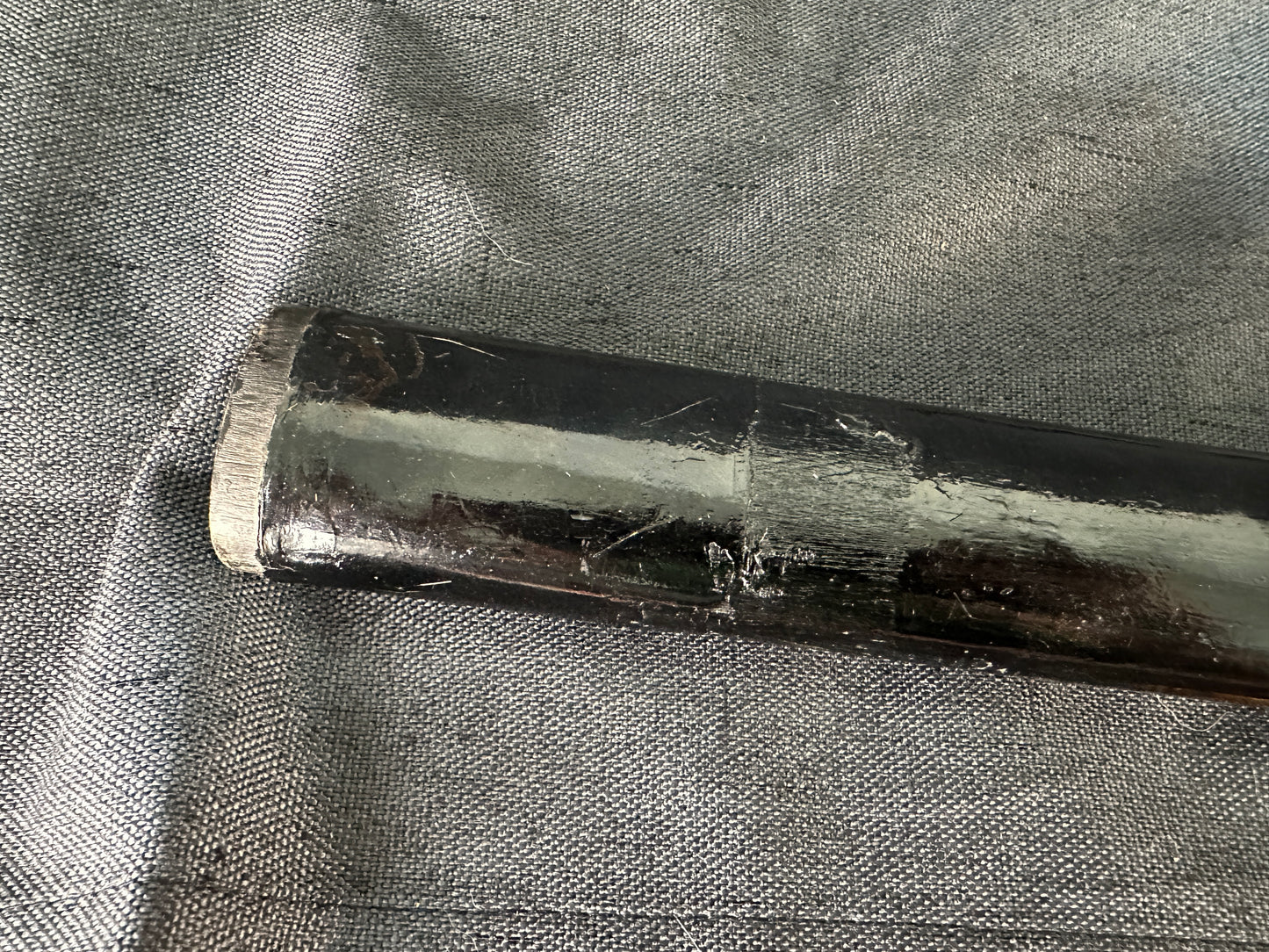
The tsuba is a round iron plate (maru-gata) with a single floral sukashi (openwork) of a plum blossom or possibly cherry, simply executed with a rustic aesthetic. The plate surface shows honest age patina with light oxidation consistent with Edo-period ironwork. The habaki is plain copper with natural patina, accompanied by a pair of brass seppa. The saya is finished in deep black lacquer (kuro ro-iro), showing visible age and wear, with scuffs, dulling, and surface chipping in several areas as seen in the photos. The lacquer retains good gloss but has evidence of old restoration along portions of the upper half. Despite wear, the saya remains structurally sound and well-fitted to the tsuka.
Taken together, the fittings reflect a cohesive floral theme—flowers in bloom representing vitality and renewal—executed in a restrained and tasteful Edo aesthetic.