Type: Tanto (broken blade) Period: Late Edo to early Meiji (circa mid-19th century) Signature: Likely 吉國 - Yoshikuni Remaining blade length: 14.8cm to break Overall length in sheath: 54cm Hamon: apparent suguha Polish: out of polish mass: 401g total
This tanto retains an appealing full koshirae despite the blade having suffered a clean break at mid-length. The remaining section shows a straight hira-zukuri form with a shallow, almost flat curvature typical of late-period utilitarian pieces. The steel presents a dark, oxidized patina along the tang with two mekugi-ana, and the lower portion of the blade retains remnants of a once-visible suguha hamon. The surface is now largely obscured by age and condition, with a dull satin tone suggesting an old, untreated polish.
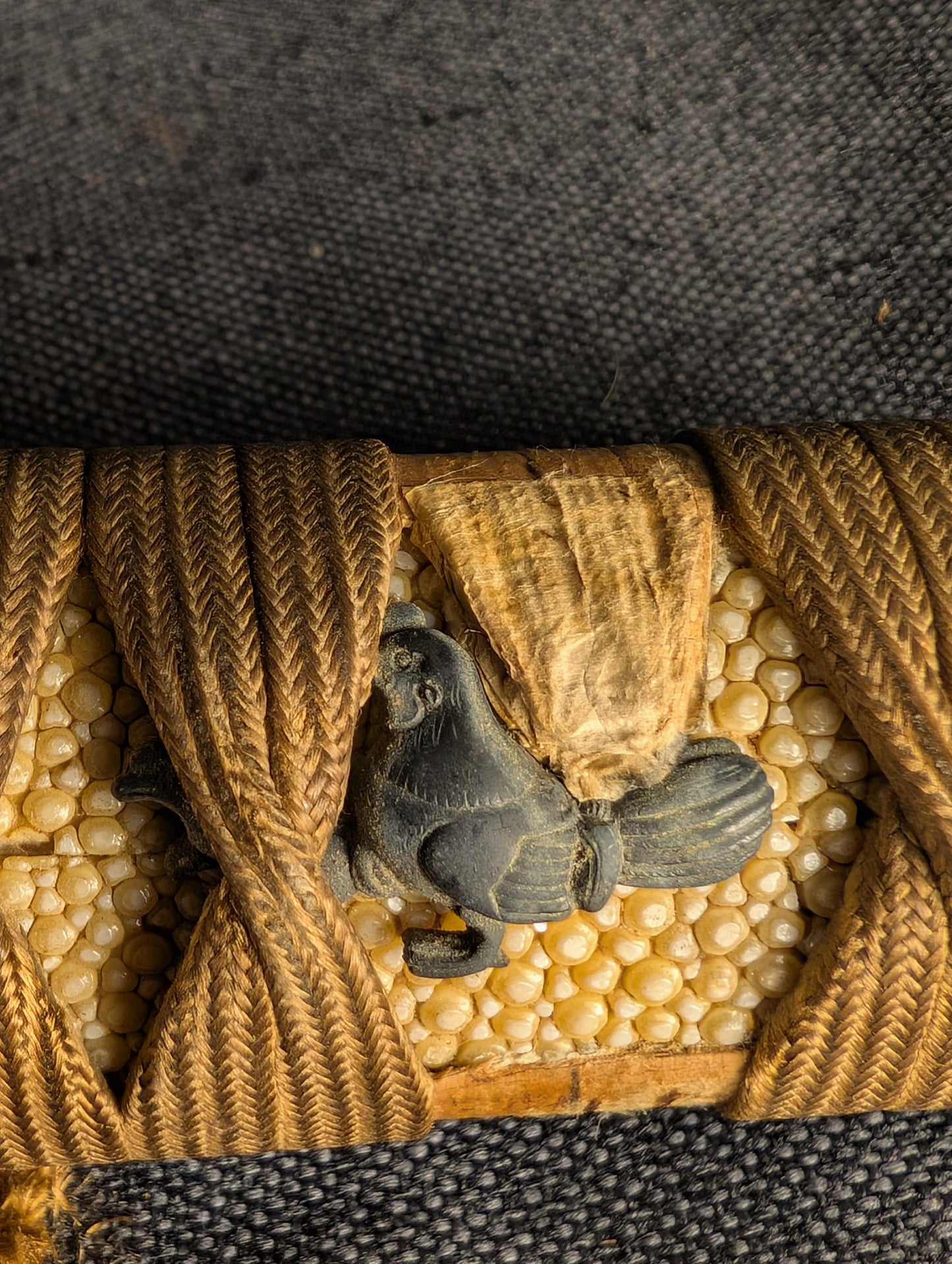
The koshirae is of pleasing, understated quality. The fuchi is a shakudo piece showing a samurai weilding a naginata with gilt highlights. The kashira is iron with shakudo trim, and a worn but still beautiful coating of fire gilding on its surface. The tsuka is wrapped in faded golden-brown silk ito in hineri-maki style over samegawa panels with excellent quality emperor nodes. The wrapping is loose and badly damaged, but the core underneath is sound. Beneath the wrap, only one menuki remains; a chicken with a bale of straw rendered in shakudo. The tsuba is elegantly carved copper with shakudo trim, with a block of shakudo filling in the old kogai-ana. The piece is carved with fine linework of storming clouds and waves, The habaki is a beautiful deeply cut stone texture in silver foil, lightly tarnished. The saya is finished in deep brown lacquer, exhibiting scuffs and small losses consistent with age, and retains its blue-gray silk sageo. Together, the fittings present a cohesive theme of subdued strength, a fine example of mid-to-late Edo taste moving toward Meiji practicality.